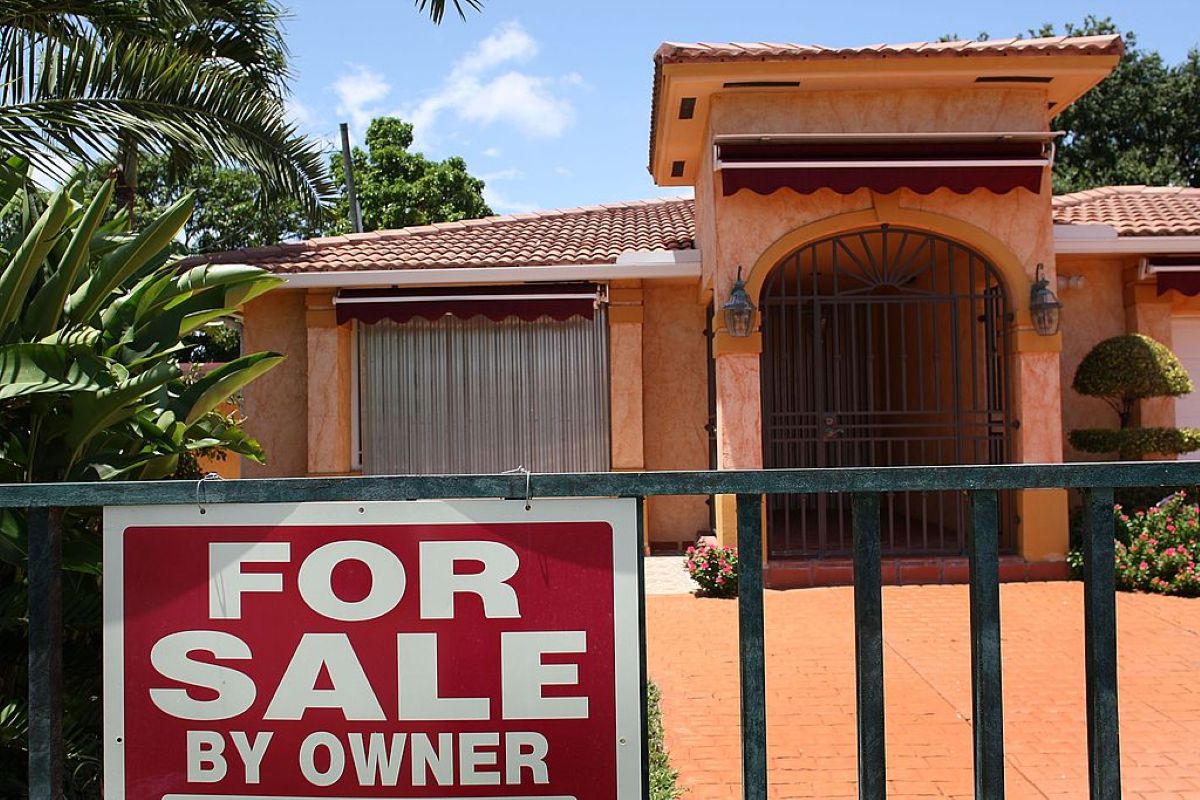
Miami Homeowners Could Lose Over $700,000 After Huge Price Drop
The Miami housing market is experiencing significant price corrections, with some homeowners facing massive losses. One Miami property has dropped its asking price by nearly 40 percent, potentially costing the seller over $700,000.
Why It Matters
Florida’s once-booming housing market is showing signs of a slowdown, with sellers slashing prices to attract buyers. According to an analysis from Pricing Culture provided to Newsweek, there have been 103 listings in Miami with price drops in just one week, underscoring the dramatic shift to a buyer’s market.
Miami’s market is seeing an average price drop of 9.89 percent across listings. However, one home in particular recently experienced a nearly 40 percent price cut.
What To Know
Miami’s real estate market has long been one of the hottest in the country, attracting buyers with its warm climate, strong job market and investment potential. However, recent data suggests a cooling trend as sellers struggle to meet buyers’ expectations. According to an analysis by Realtor.com, Miami is currently in a buyer’s market, meaning “the supply of homes is greater than the demand for homes.”
Joe Raedle / Staff/Getty Images
One of the most striking examples of this shift is the property in Miami, Florida. Initially listed at $1,990,000, the price has now been adjusted three times, with the most recent cut bringing it down to $1,250,000. This drop of $740,000 represents a more-than 37 percent reduction.
This home was initially positioned as a luxury home with a premium price tag, but the multiple price reductions indicate challenges in finding a buyer willing to meet those expectations. While the revised listing may attract more interest, it remains uncertain whether it will sell at this price or face further cuts.
An analysis from Pricing Culture provided to Newsweek highlights the severity of the situation. The home in question has already undergone two reductions and a 37.19 percent price drop, surpassing the average of 1.96 price cuts per listing in the city and average drop of 9.89 percent.
Several factors contribute to Miami’s declining home prices. High mortgage rates have made homeownership more expensive, pushing potential buyers to wait for more affordable options. In addition, inventory levels have increased, giving buyers more choices and reducing the urgency to overbid on properties.
Experts note that while Miami’s real estate market is still desirable, homeowners must adjust their expectations. The days of record-high home appreciation may be slowing, leading sellers to make difficult pricing decisions.
What People Are Saying
According to a recent report by Norada Real Estate Investments: “One of the most significant shifts in the current Florida housing market trends is the increase in inventory. In September and the third quarter of 2024, Florida saw a substantial year-over-year rise in the number of homes available for purchase. This is great news for buyers, as it signifies an increase in choice and could lead to better deals.”
NAR chief economist Lawrence Yun said in a statement: “Mortgage rates have refused to budge for several months despite multiple rounds of short-term interest rate cuts by the Federal Reserve. When combined with elevated home prices, housing affordability remains a major challenge.”
According to the UBS Global Real Estate Bubble Index: “The boom in the Miami housing market has cooled somewhat due to significantly higher mortgage rates. Real house price growth has halved compared to 2022. However, with an annual increase of 7 percent per mid-2024, the growth was still almost twice as high as the 20-year average. Price rises in recent years have strongly decoupled from income and rental growth, leading to significant imbalances in the residential property market and a high bubble risk.”
Redfin economics research lead Chen Zhao said in a statement: “Historically, a buyer’s market has been defined as when months of supply reaches four-six months—but old definitions don’t fit the reality of today’s market. Many buyers don’t feel like they are in a buyer’s market, with home prices at near-record highs and mortgage rates elevated. But we are more than halfway through the decade and this is the first time we can say that buyers have as much, if not more, power than sellers.”
What Happens Next
If mortgage rates remain elevated, the Miami housing market could face a continuing slowdown in home sales and a potential increase in inventory as fewer buyers enter the market. Additionally, elevated mortgage rates may discourage current homeowners from selling their properties, as they may be reluctant to give up their existing low-rate mortgages. This could limit options for prospective buyers.