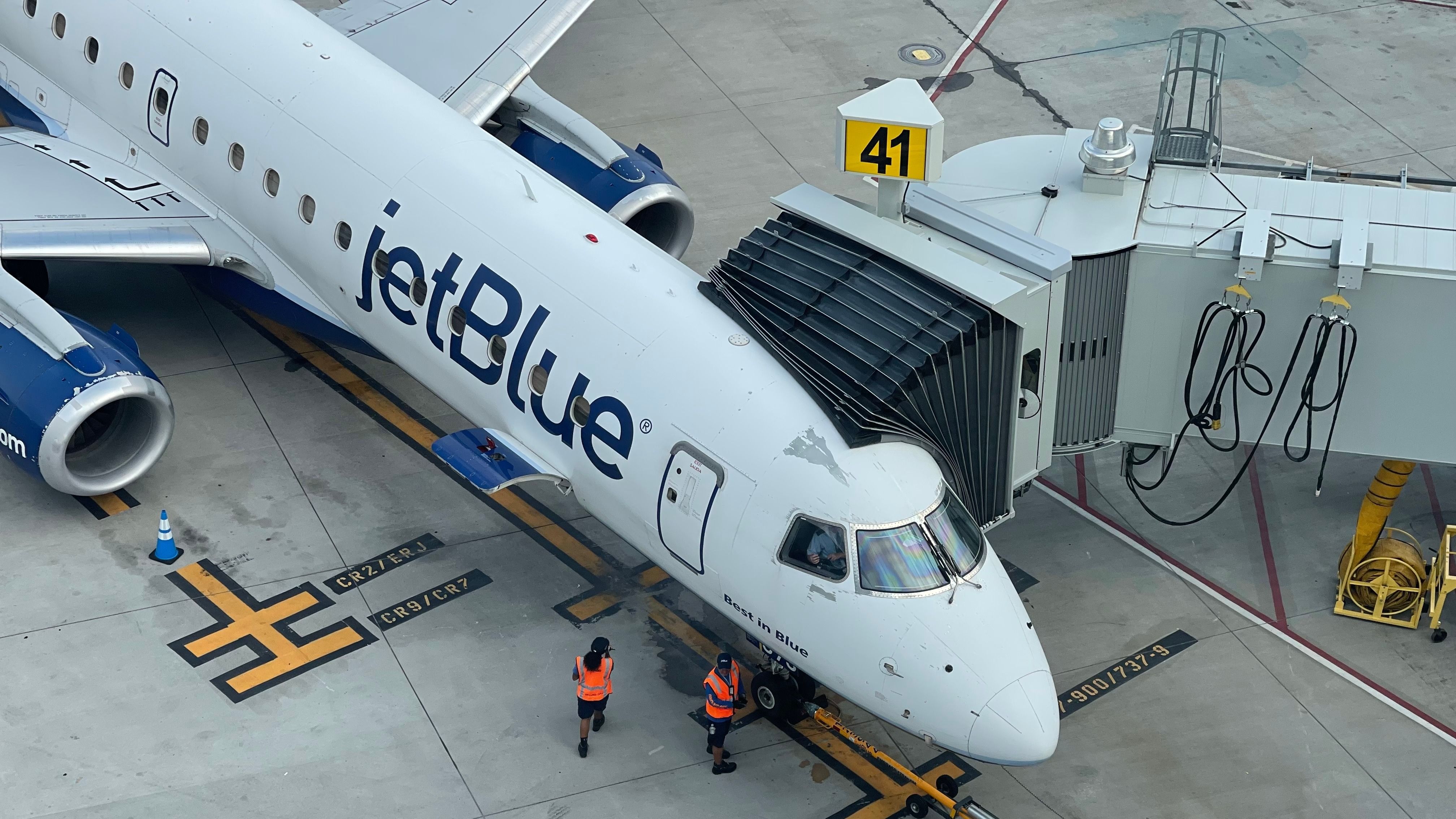
JetBlue Pulls Out Of Miami & Seattle
New York-based hybrid service carrier (HSC) JetBlue has, in recent months, extensively pursued the elimination of unprofitable routes. The airline’s goals of consolidating its network in order to reduce individual operating costs and streamline passenger traffic have come amid financial difficulties that the airline has been forced to cope with. On Friday, June 20, 2025, JetBlue made one of its boldest moves yet when it comes to consolidating its network and retreating away from routes that face heavy competition.
- Year Founded
-
2000
- CEO
-
Joanna Geraghty
JetBlue yesterday elected to withdraw from both  Miami International Airport (MIA) and
 Boston Logan International Airport (BOS), two markets that were once served by the airline from multiple different destinations. These routes are the backbone of the carrier’s operations, especially as it seeks to be a major player on routes from destinations like Boston Logan International Airport (BOS) and John F. Kennedy International Airport (JFK) to popular leisure travel hotspots like Miami and Seattle.
A Deeper Look At The Airline’s Withdrawal From Miami International Airport

JetBlue made it clear yesterday that it would be exiting the Miami market entirely by the time September comes around, the end of a short-lived expansion experiment that began back in 2021, according to One Mile At A Time. The carrier initially launched flights to Miami to capitalize on increased post-pandemic demand for leisure travel to destinations in South Florida. The carrier operated flights to Miami from the following five hub airports:
- Boston Logan International Airport (BOS)
- Newark Liberty International Airport (EWR)
- Bradley International Airport (BDL)
- John F. Kennedy International Airport (JFK) in New York
- Los Angeles International Airport (LAX)
JetBlue faces extensive competition out of Miami, something which makes this route elimination a bit less surprising. The facility is a major hub for American Airlines, which has been quick to try and defend its turf from outsiders. JetBlue does have a strong presence in the Northeast, but on these short-haul routes, it lacks the premium offerings needed to target high-spending travelers.
At the end of the day, those flying from New York and other cities in the Northeast to Florida are mostly high-spending, consistent travelers. When it comes to premium products and the offerings of its loyalty program, JetBlue does lag behind major competitors in a few key ways.

Related
JetBlue’s Drastic Newark & LaGuardia Cutbacks This Month
The airline has cut several routes and scaled back on flights this year.
A Deeper Look At The Airline’s Withdrawal From Seattle-Tacoma International Airport
JetBlue will also be significantly reducing its presence at Seattle-Tacoma International Airport (SEA), from which it will now be shifting towards seasonal-only services as part of its larger cost-cutting and downsizing strategies. The carrier has not been profitable since 2019, and it is now looking to implement a large-scale turnaround that includes cutting underperforming routes.
The airline has noted that it is looking to reduce operations during periods of low passenger demand. The carrier will now be scaling back its operations in Seattle to the peak summer travel months, likely due to its inability to capture off-season travelers away from Alaska Airlines and Delta Air Lines, the dominant players on routes from New York to Seattle.
This move demonstrates to us yet again that JetBlue will be looking to pivot away from serving business travelers, mostly due to its rising operational costs and the competition it faces. JetBlue has yet to answer Simple Flying’s request for comment on the matter.
What Is The Bottom Line?

At the end of the day, JetBlue’s route strategy team is demonstrating some of its long-term plans through these two route withdrawals. For starters, the carrier is demonstrating that it will struggle to compete on key routes against market incumbents like Delta and American.
What the airline is looking to do, however, is broaden its market appeal by expanding its network. JetBlue is moving away from Seattle and Miami, but it is adding, for example, Traverse City, to its route map.
These moves show us a new kind of JetBlue, one that is focused more on capturing adventure-seeking, leisure-oriented travelers. This is a rapidly growing passenger demographic, one being sought out by multiple carriers at once. We will have to wait until Monday morning to see how traders react to the airline’s latest moves.