House panel OKs bill to weaken local land use control, curb review fees, examine ending Miami-Dade’s UDB
Legislation is advancing that would restrain local land-use authority, curb construction fees and order a state study on eliminating boundaries in Miami-Dade County that protect vulnerable environments like the Everglades from development.
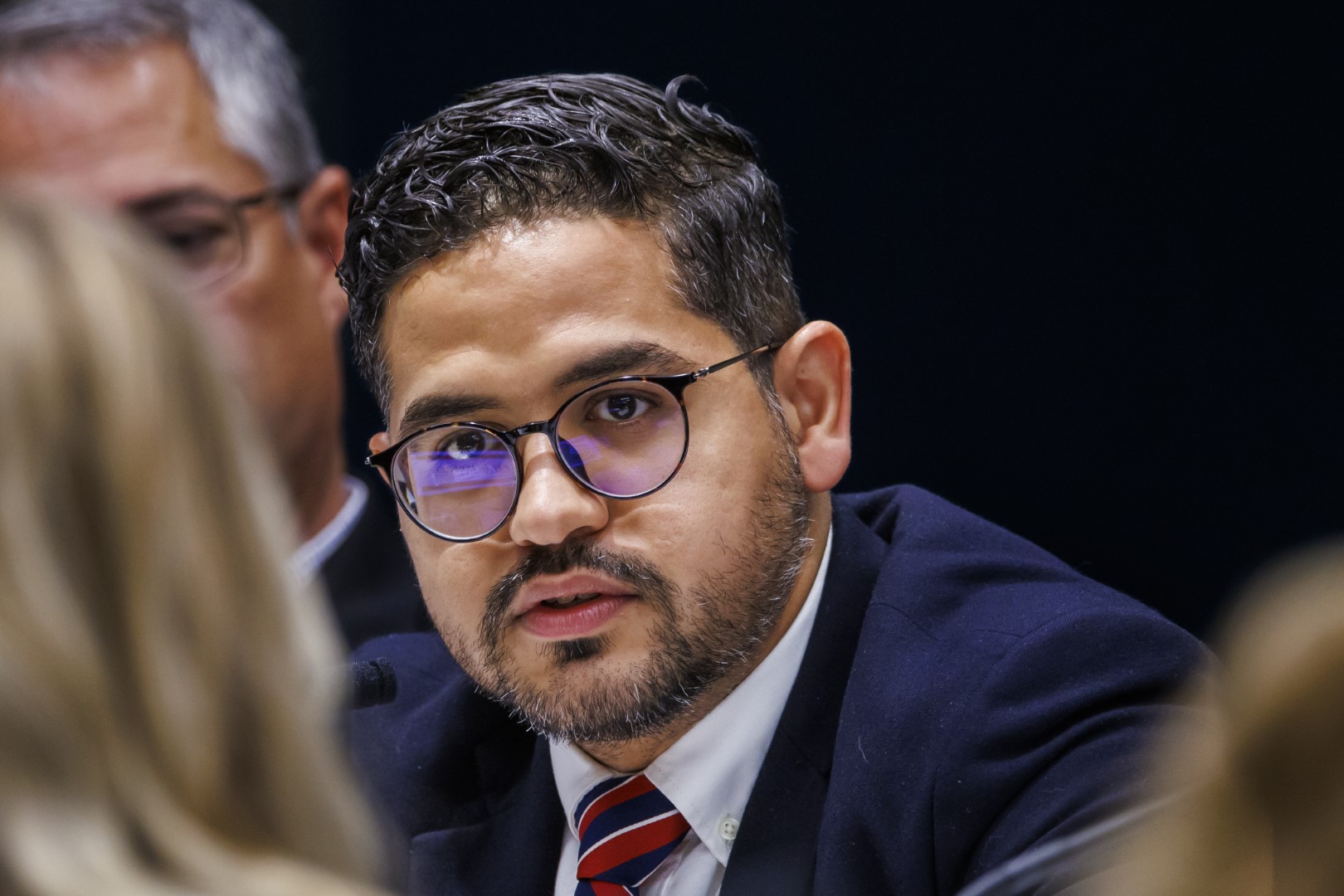
Members of the House Intergovernmental Affairs Subcommittee voted 10-3 to advance the preemption measure (HB 399) by Hialeah Republican Rep. David Borrero, which has two more stops in the chamber before reaching a floor vote.
Its Senate companion (SB 208) by Ocala Republican Sen. Stan McClain, which does not contain the land-use restraints or environmental boundary provisions, has already advanced through two of three committee stops with uniform support.
Borrero framed HB 399 as a cost- and bureaucracy-cutting proposal that will add much-needed supply to a state where many counties have urgent demands for affordable housing. Today, he said, developers endure “an egregious amount of costs and red tape” — millions per development, often — while seeking reviews for projects that may ultimately be denied approval.
“You go back to what is causing the housing crisis here in some of our communities in Florida, and I will submit to you that the housing crisis is one that is created by local governments,” he said.
“When local governments create this unpredictability, when they create all of these red-tape obstacles that have to be overcome, with the great amount of uncertainty, legal fees, costs, it raises the cost of housing. It raises the cost of rent.”
Borrero described HB 399 as a “negotiated bill” developed with input from the Florida League of Cities and Florida League of Counties. But the latter of those two organizations signaled opposition to the bill, noting changes Borrero added in a committee substitute he presented Wednesday.
If approved in its current form, HB 399 would:
— Replace provisions in certain county charters that require supermajorities for land use map amendments with ones requiring a simple majority, effectively making it easier to approve land use changes.
— Direct the Office of Program Policy Analysis and Government Accountability (OPPAGA) to study the impacts of removing urban development boundaries (UDB) or similar boundaries “in Miami-Dade County and other counties,” including the effects on housing costs, growth control and environmental protection.

— Limit and standardize how local governments can review and charge for residential development approvals while restraining subjective denials based on “compatibility.” In practice, this provision would ideally stop counties and cities from using vague or subjective reasons to block housing projects and cap how much they can charge developers.
— Require county and municipal application fees for development permits to be based on actual review costs, publicly posted, and not based on construction costs or project value.
— Mandate that comprehensive plans and land development regulations use objective, clearly defined compatibility factors.
— Bar local governments from denying residential rezoning or site plans on compatibility grounds if proposed mitigation measures address those issues, unless the denial includes detailed written findings.
AARP Florida, the Florida Chamber of Commerce, Associated Industries of Florida and Highland Homes registered Wednesday as proponents of the bill, which House records show has nearly 60 lobbyist registrations.
A handful of opponents, including Miami-Dade lobbyist Jess McCarty, Orange County Legislative Administrator Mark Jeffries and Florida for All, also appeared in opposition to the measure.
Courtney Mooney, Associate Director of the Florida Association of Counties, thanked Borrero for conferring with her group about the bill. She said her organization worked “very diligently” with stakeholders on the initial version of the legislation.
“But currently, we are trying to understand the full effects the added new language … will have on our charter counties,” she said. “For now, we do have to oppose it.”
Paul Owens, President of 1000 Friends of Florida, commended Borrero for removing some “troubling provisions” from HB 399’s originally filed version, but his group remains allergic to the bill’s supermajority-to-majority vote change and UDB study portion.
“The UDB in Miami-Dade has served as an essential discipline for promoting urban infill development and protecting the priceless natural resources of our Everglades to the west and Biscayne Bay to the east,” he said. “Taxpayers are investing billions of dollars to restore and protect those areas. The UDB is the foundation for environmentally sustainable development in the county. It should not be eroded by a study that begins (by) questioning its benefits.”
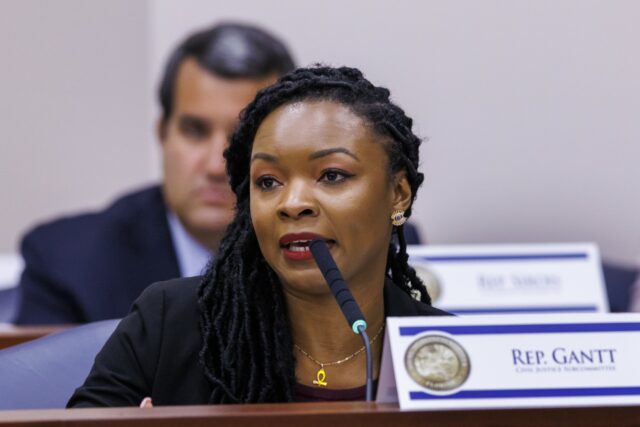
Miami Democratic Rep. Ashley Gantt cited those concerns in explaining why she was voting against HB 399, which she described as a “tremendous overreach” that “screams of ‘Big Brother.’”
“When we talk about county charters, that has direct input from the same people that we … are here to represent,” she said. “To me, (with this bill), we are saying, ‘Oh yeah, you all voted on your county charter, but we don’t care; we have the ability to preempt you, so we’re going to do that.’ I don’t think that’s right.”
Regarding the UDB provision, Gantt noted that the Miami-Dade Commission has seen significant public opposition over the years to moving or encroaching the boundary. One high-profile instance occurred in 2022, when the Commission overrode Mayor Daniella Levine Cava’s veto of an ordinance moving the UDB.
A resident’s legal challenge halted the project, which appeared to die with an appellate court’s ruling last February. In December, the project returned under a new name and with a smaller footprint, but still targeting land outside the UDB.
In the interim, several other project proposals have been filed with the county seeking to build behind the boundary.
State lawmakers, many of them Republicans from Miami-Dade and other South Florida localities, have tried repeatedly in recent years to strengthen protections against potentially environment-damaging development.
Gantt called the study proposed in Borrero’s bill “the groundwork” for future UDB preemption.
“People are spilling out of the County Commission auditorium when it comes to this issue in Miami-Dade,” she said. “So, while we do have the ability up here to make preempting laws for local government, I think that is, again, an area where we need to allow local governments to actually govern and not to be the broad, big-handed, big-brothered government because we have the ability to do so.”
Borrero rejected the notion that the state shouldn’t study something, as any new information gleaned from such a query could help Florida grow and “apply what may reasonably be beneficial for our communities.”
He said HB 399 “takes a giant leap” toward meeting the demand for more housing inventory in built-out places like Miami-Dade.
Democratic Reps. Daryl Campbell of Fort Lauderdale and Rita Harris of Orlando joined Gantt in voting “no” on the measure, which will next go to the Housing, Agriculture and Tourism Subcommittee.
Parkland Democratic Rep. Dan Daley said he would support HB 399 for now, in the hope that Borrero will work more with counties to fine-tune the proposal. “But that won’t stay that way if there’s not some sort of resolution” to the concerns expressed, he added.
SB 208, meanwhile, has advanced through two of three committees to which it was referred without opposition.