Trump Team Launches Miami Blitz to End Russia’s War in Ukraine
WASHINGTON, DC – Palm trees and pastel facades are an unlikely backdrop for an effort to end Europe’s bloodiest war since World War II.
Yet this weekend, Miami is where the Trump administration believes it can finally seal a deal on Ukraine – or acknowledge that a year of diplomacy has failed to produce one.
JOIN US ON TELEGRAM
Follow our coverage of the war on the @Kyivpost_official.
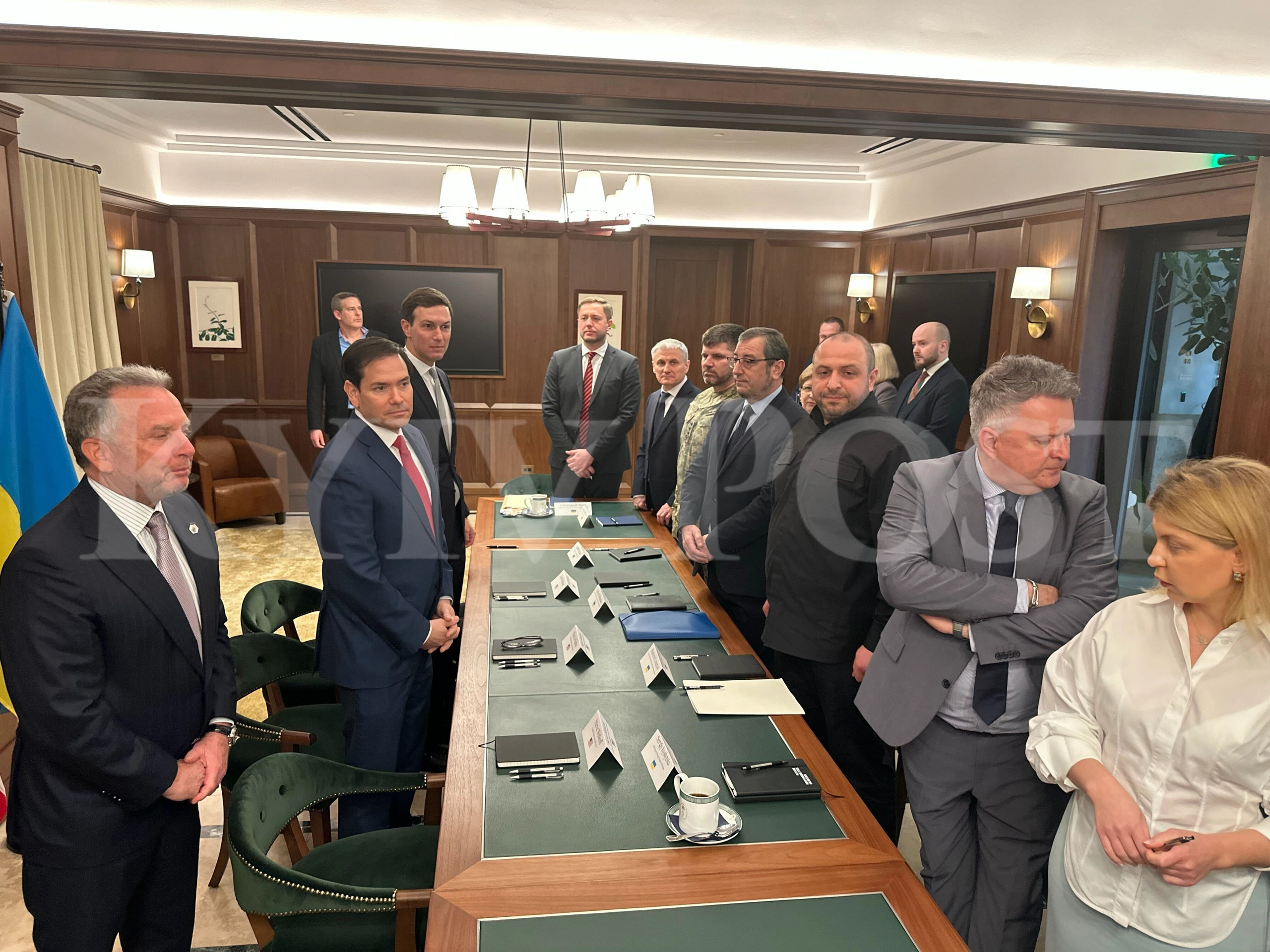
US officials confirmed Thursday that a tightly choreographed series of meetings will begin Saturday, as the White House presses for a breakthrough in the war ahead of the invasion’s four-year mark.
At the center of the talks is Kirill Dmitriev, the Kremlin-linked head of Russia’s sovereign wealth fund, who is expected to meet with Trump’s special envoy Steve Witkoff and the president’s son-in-law and informal power broker, Jared Kushner.
Witkoff is also expected to host Ukrainian officials separately, underscoring Washington’s preferred role as sole intermediary – and reinforcing European fears that decisions about their security are once again being made without them in the room.
It remains unclear whether any of the delegations will meet with Secretary of State Marco Rubio, who happens to be in Miami this weekend as well.
Trump himself will also spend the weekend in Florida and has no plans to return to Washington before January, officials told Kyiv Post, adding another layer of ambiguity about how closely the president will be engaged in the talks.
Other Topics of Interest
US Lawmakers Escalate Pressure on Moscow With Sweeping Sanctions, Shadow Fleet Crackdown
Congress is moving aggressively on two fronts to squeeze Putin’s war economy, pairing a House push for sanctions with a Senate effort to seize oil tankers helping fuel Russia’s invasion.
The immediate goal is to test whether a US-drafted peace framework, quietly circulated among Ukrainian and European officials in Berlin earlier this week, has any chance of surviving first contact with Vladimir Putin.
Trump, for his part, is signaling urgency. “They’re getting close to something,” he told reporters Thursday, once again casting himself as the dealmaker nearing the finish line.
But he also delivered a warning – and a familiar pressure tactic – aimed squarely at Kyiv: move quickly, or Moscow may walk.
Putin’s wordplay, and warning
Behind the White House’s optimism, veteran Russia watchers in Washington hear something very different: a Kremlin leader who believes time is on his side.
Speaking Thursday at the Brookings Institution, Fiona Hill, a former senior National Security Council official during Trump’s first term, pointed to Putin’s increasingly menacing rhetoric as a clue to how seriously he is taking the process.
In recent remarks, Putin used the term “podsviniki” – a layered insult suggesting Europeans are subordinate “under-swine” to the US – language Hill described as deliberately coded and unmistakably dismissive.
The message, she argued, is not subtle. Putin sees the talks as a power play between Moscow and Washington, not a multilateral effort to stabilize Europe. In his telling, Europe is weak, Ukraine is pressured, and responsibility for compromise lies everywhere but in the Kremlin.
Hill stressed that this is classic Putin: performative engagement, heavy on symbolism and insult, light on actual concessions.
From her vantage point, nothing in his language or posture suggests a leader preparing to trade away core war aims. If anything, it signals confidence – and a belief that others are more desperate for an agreement than he is.
Inside the Witkoff–Dmitriev framework
The Miami talks are built around an emerging framework often described in diplomatic shorthand as the Witkoff–Dmitriev plan: US-backed security assurances for Ukraine paired with territorial concessions Kyiv would rather not make.
The Trump team has worked to narrow gaps with President Volodymyr Zelensky, and by most accounts, progress has been made. But whether that progress matters depends on a third party who is showing little enthusiasm.
Thomas Wright, who served on the National Security Council during the Biden administration, questioned whether the process qualifies as real diplomacy at all.
Speaking at Brookings, he argued that while Washington and Kyiv are inching closer, there is no evidence Putin has signed on to even the initial framework – despite Dmitriev’s involvement.
The problem, Wright said, is structural. Russia’s publicly stated demands – particularly around Ukraine’s demilitarization – go far beyond what is on the table.
Putin’s recent comments only reinforce the sense that Moscow is prepared to drag things out, selectively agreeing in principle while reopening the hardest questions later.
That dynamic, Wright suggested, has produced a different kind of negotiation – one driven less by compromise than by blame avoidance.
Ukrainians are engaging constructively. US officials are pushing for momentum. Europeans are shuttling behind the scenes. No one wants to be the actor Trump blames if his signature foreign-policy push collapses.
Europe watches from sidelines
If Miami is about speed, Europe is playing a longer – and more anxious – game.
European governments, Wright noted, have quietly worked for months to bridge gaps between Washington and Kyiv, particularly after early Trump–Zelenskyy tensions threatened to derail talks altogether.
Those efforts helped restore intelligence cooperation and reopen diplomatic channels.
Still, Europe remains largely excluded from the formal process – a fact that worries capitals already bracing for the security consequences of a weak deal.
Their fear is not limited to Ukraine’s borders. A settlement negotiated over European heads could undermine the continent’s security architecture while leaving Russia on a permanent war footing – free to rebuild, probe NATO defenses, and test political resolve.
European leaders are increasing defense spending and speaking more openly about the scale of the threat. But, as both Hill and Wright emphasized, mobilizing public opinion and translating commitments into military capability takes time – time Putin may be betting against.
Trump’s bigger obsession
For Trump, Ukraine is not just a regional conflict. Hill argued it sits within a much larger worldview shaped by Cold War anxieties, nuclear brinkmanship, and unfinished business from the 1980s.
Trump has been explicit about his desire for a Nobel Peace Prize, but Hill cautioned against seeing that as the sole motivator.
He has long imagined himself as a historic arms-control negotiator – someone who could finish what Reagan-era diplomacy started and reduce the risk of nuclear catastrophe.
In that vision, Ukraine is only one piece of a broader puzzle that includes Russia, China, North Korea, and Iran.
The irony, Hill warned, is that forcing a premature peace in Ukraine could have the opposite effect: weakening nonproliferation norms and encouraging vulnerable states to conclude that nuclear weapons are the only reliable security guarantee.
Putin, meanwhile, sees little incentive to stop. He has absorbed sanctions, stockpiled reserves, and convinced himself that Russia can outlast Ukraine – and the West’s political will. Peace, in his calculus, brings its own risks: a militarized society, an economy on a war footing, and few tangible gains to justify the cost.
Clock problem
Wright’s advice to the Trump team was blunt: slow down.
By signaling desperation for a quick deal, he argued, Washington undercuts its own leverage. Putin is not in a hurry. He can wait, divide allies, and probe for better terms.
A more patient approach – maintaining military support, holding the line on outlandish demands, and keeping negotiations open without forcing an outcome – might do more to change Moscow’s calculus over time.
The challenge is that patience does not fit Trump’s political style – or his timeline.
Deal – or just another delay?
As delegations shuttle between hotel conference rooms this weekend, Miami may briefly feel like the center of the diplomatic world.
But the real test is not whether a framework emerges. It is whether Putin believes ending the war serves his interests more than continuing it. So far, there is little evidence he does.
In the city that invented the “Art of the Deal,” Trump is betting his prestige on a Florida breakthrough. By next week, he could be heralding momentum toward the “deal of the century.”
Or the White House may discover that what looks like progress is actually a well-worn Russian tactic: another pause, another pivot, and more time for Putin to consolidate his gains.
In Moscow’s long game, a handshake in the Florida sun is often just the opening act for a cold walkout in the winter.